Practical Assignment (Observation and Analysis)
- Define the Gestalt Theory in your own words.
- Page through a magazine or newspaper or browse the Internet and find a different logo for each of the Gestalt principles. Explain in your own words, which logos are showing which principles, motivate your answer.
- Find examples of four themes of thinking, and explain your choices.
The Gestalt Theory
A “Unified whole”, as it means in a psychology term. It is about our visual perception. We can use the Gestalt Theory in our design, since it is about how our mind perceives wholes out of incomplete parts. This theory has different parts that we can bring together to form a “whole” or a singular entity. By using the Gestalt Theory, it will help us in our design to get the message out there; it gets us to see the visual image.
We have different Gestalt principles, we have:
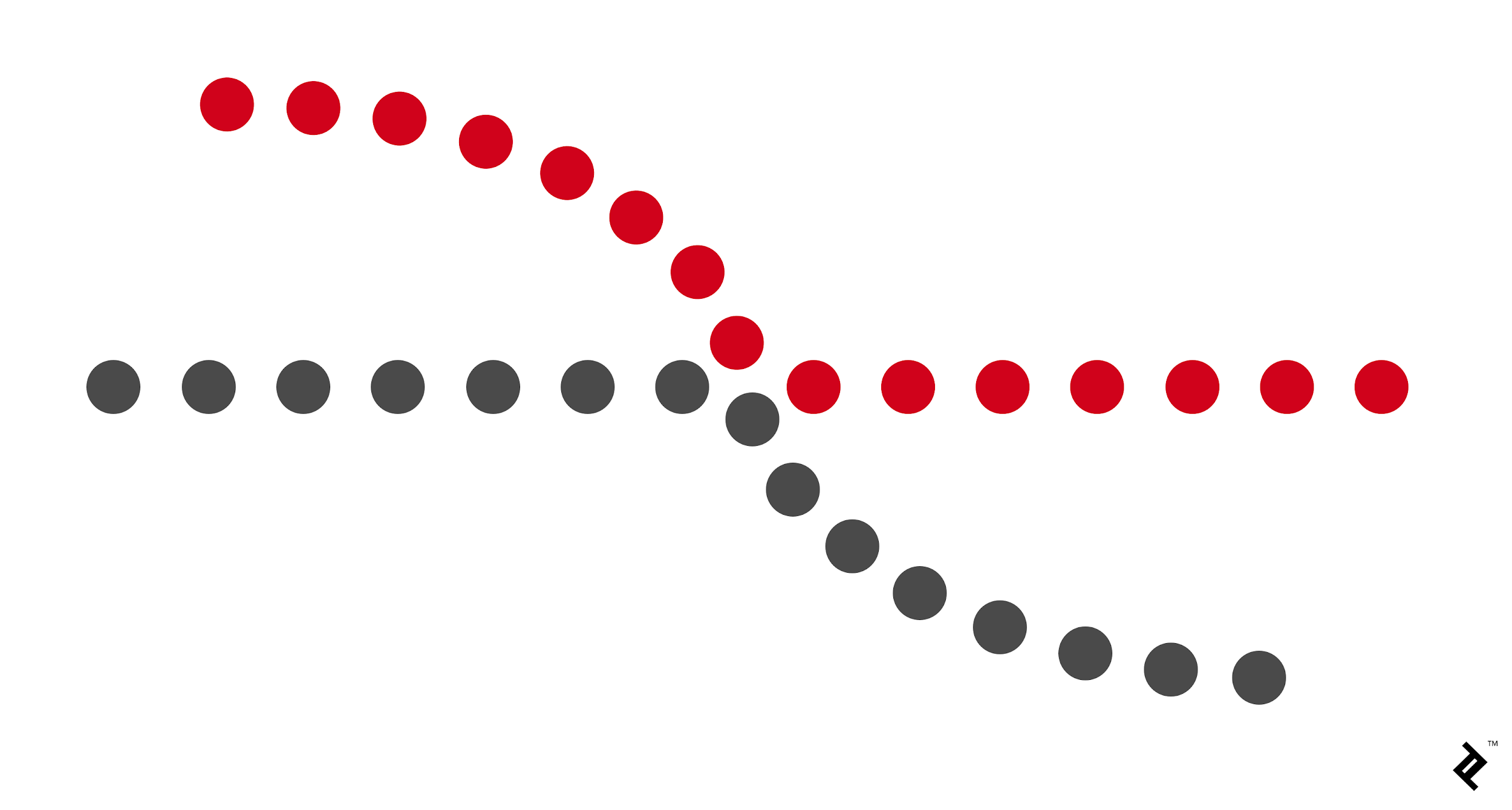
Similarity; and similarity happens when we have shapes/objects that look similar to one another. We tend to see them as patterns or groups, when they are unified together. If there is an object that looks different, it is called an ‘anomaly’, and it will be the focus point when it stands out of the group.

Continuation; is when your eyes move through one starting point to another, when you have movement throughout the design, like an “arrow” pointing you in one direction to another object.. This can be a line or a curve.
Closure; this is when our eyes see an unfilled shape, but our eyes “closes” the design, because there is just enough information to do so. Therefore this is called “Closure”, it is when we complete the shape.

Proximity; This is when single objects is placed close enough together, and therefor are perceived as a group, even though there is distance between the objects, they are seen as a “whole”.

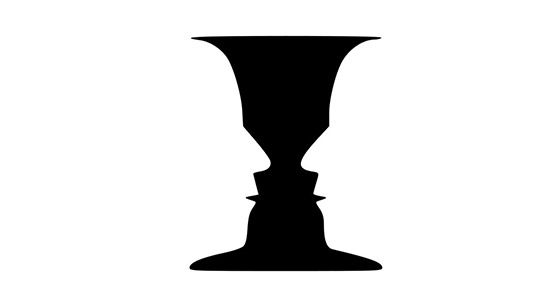
Figure and Ground; it’s when our eyes differentiate an object/shape from its surrounding area. Our eyes see objects, silhouettes or shapes as the figure, while the surrounding white space is seen as the ground. The white space “ground” is as important as the “figure”, they work together to balance one another. It is like when you are reading this text, the text you are reading in this blog post is seen as the figure, and the white space is seen as the ground.
There is 3 different types of figure ground relationships, you have:
Stable; this is when you see it clearly what is figure or what is ground. You see right away what dominates the composition.
Reversible; this is when it is tension in the composition, when both the figure and the ground are equally attracting the viewer. This makes the design dynamic.
Ambiguous; this is when elements both can look figure or ground. The shapes of figure and ground can both be interesting, and it will be up to the viewer to decide and find their own starting point of the composition.

 Dan´s blog